
 Connect

Office location
Australia
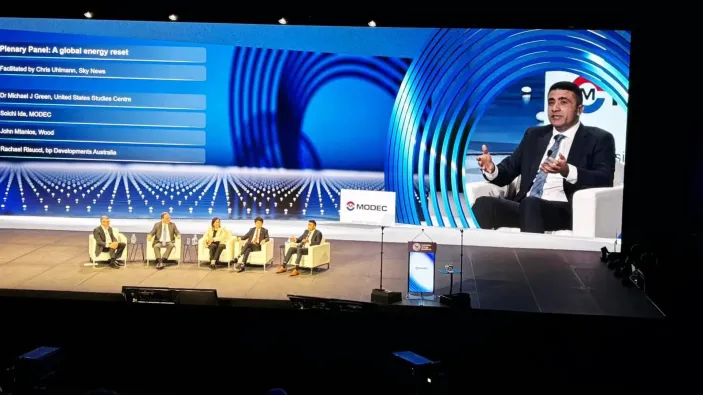


John Mtanios is President of Wood's Asia Pacific business, where he leads regional investment, growth and integrated delivery. His role places him at the intersection of the geopolitical, commercial and technological forces explored at the Australian Energy Producers Conference and Exhibition plenary, 'A Global Energy Reset', on 19 May 2026. In this article, John shares his key takeaways from the session which featured leaders from across Australia's energy sector.
Last week at the Australian Energy Producers Conference in Adelaide, one line really cut through the noise for me - energy security has become personal.
Recent geopolitical events, particularly the conflict in the Middle East, have done something that years of policy discussion alone could not achieve. They’ve moved energy security from an abstract concept to something tangible and very real for individuals, businesses and governments across the globe. It’s no longer just a policy discussion, it’s a daily reality that’s shaping decisions, expectations, and crucially for us in the sector, investment.
That shift was evident throughout the ‘Global Energy Reset’ plenary discussion. Conversations I am having with clients, peers and colleagues across the region have changed. Energy security is now front and centre, and with it, a renewed focus on reliability, resilience and delivery.
The question is no longer just how much energy we can produce, but how reliably it can be delivered and what happens to it after production.
As one of the world’s largest LNG exporters, Australia plays a critical role in regional energy systems. But that role is evolving and we must continue to get the right balance between domestic resilience and international reliability, recognising that both are essential to Australia’s economic and strategic interests.
Domestic energy policy is a live and important conversation. What matters most for the sector is that whatever framework emerges gives investors the confidence to commit because the projects that get built are the ones where the commercial signals are clear and the framework is stable.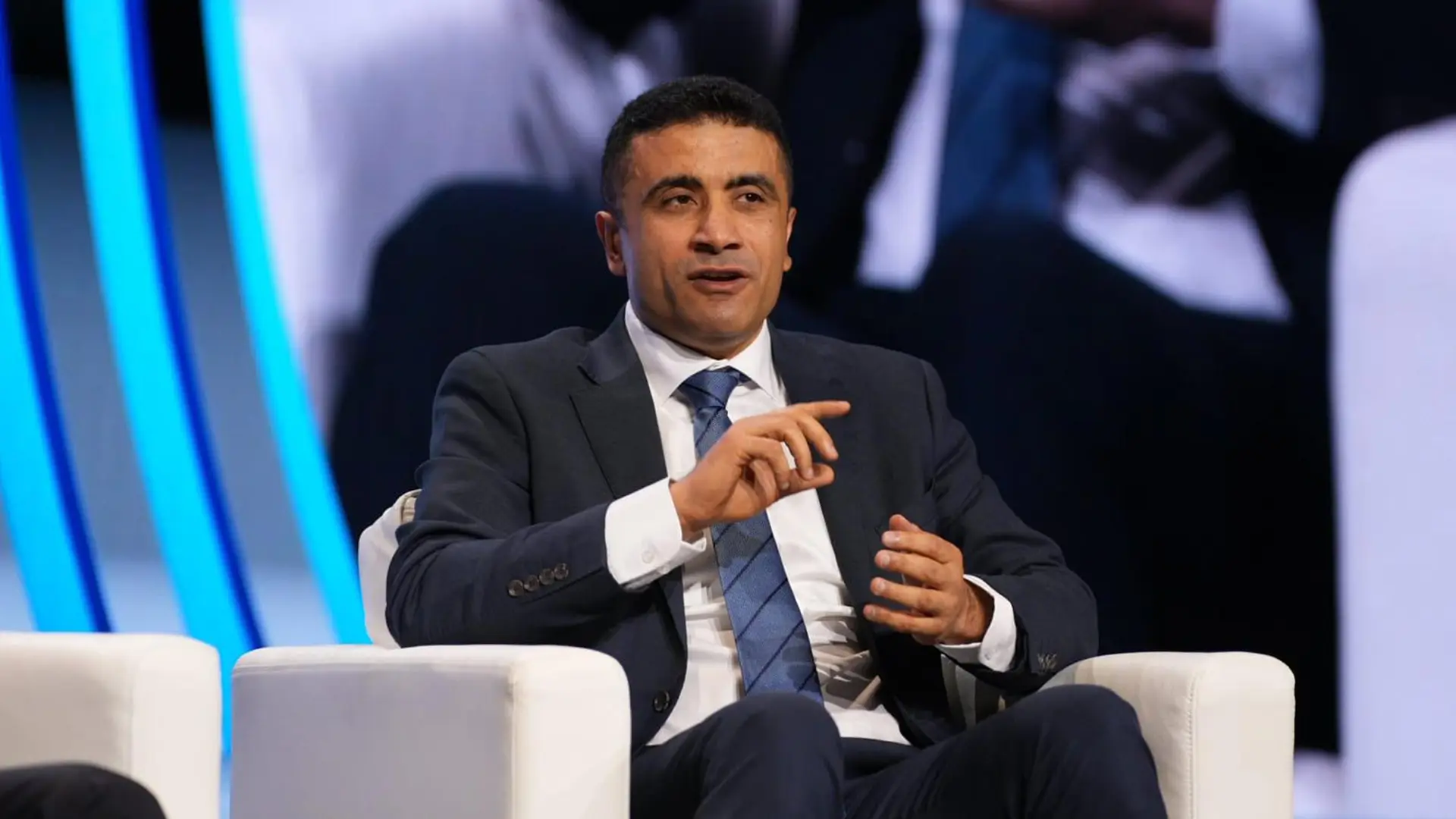
Reliability matters just as much as volume. Today, assets that perform day in and day out are what underpin both domestic stability and international credibility. This is where Australia has a clear advantage.
Australia’s existing LNG and gas infrastructure is world-class and deeply embedded in regional energy systems. But the real opportunity now is not just maintaining that infrastructure, it’s optimising it. Extending the life of these assets will extend our opportunity.
In every client conversation I am having across the region right now, the question is not just what we build next, it is what more we can get from what we already have.
While discussions often focus on building new supply and new energy supply is absolutely needed, that’s not in question, but in a world of capital constraints, the realities of project timelines and supply chain pressures, optimisation can deliver more immediate gains.
Some of the fastest gains in energy security are sitting in the assets already operating across the region. Extending the life of infrastructure is often framed as a technical or maintenance decision. In reality, it’s a strategic one.
Old infrastructure does not mean obsolete infrastructure. With the right approach, existing assets can continue to deliver value, security and lower emissions, for decades to come.
This is an opportunity to continue shifting the mindset, moving from maintaining assets to actively optimising them.
Digitalisation is a critical enabler of this shift. Digital tools and AI are already reshaping how energy infrastructure performs in areas such as predictive maintenance, digital twins and AI-driven operations. And the impact on energy security is direct - more uptime, faster response to disruption and more consistent supply.
Australia’s competitive position will increasingly come down to speed and reliability.
Globally, competition is intensifying. Qatar brings scale. The US brings cost advantages. Demand across Southeast Asia will persist regardless of where supply comes from.
The question for Australia is will we lead, or will we allow others to fill the gap? Will we create the conditions for capital to stay and be deployed locally?
Investment will follow certainty. Markets will favour reliability. Capital will flow to projects that can deliver through volatility.
The discussion in Adelaide reinforced three clear points for me:
Energy security is more personal than ever, which makes it more immediate, more practical and more focused on outcomes.
Ultimately, it comes down to one thing…delivery.