




Anton Cuschieri leads integrity and asset management scopes across the Asia Pacific region, helping operators stabilise and optimise maintenance on mature offshore assets. In this article, he explores why rebuilding maintenance foundations is critical to unlocking long‑term value in late life facilities.
Across Southeast Asia, a significant portion of offshore infrastructure is now operating well beyond its original design life.
In Malaysia alone, approximately 40% of its 300+ offshore platforms are over 30 years old, while regional studies suggest more than 1,500 platforms and 7,000 wells will eventually require late life strategies before 2030.
These realities shape the operating environment many maintenance and integrity teams work within today. When operators acquire or integrate mature offshore portfolios, they inherit not only facilities but entire ecosystems of legacy maintenance practices and Computerised Maintenance Management System (CMMS) data structures.
In these contexts, value can only be realised through rebuilding - not replacing - the foundations that underpin safe and efficient maintenance. We’ve seen firsthand that rebuilding maintenance foundations can unlock a 25% reduction in planned maintenance work, without increasing asset risk.
In our experience, getting the foundations right before optimising is what separates sustainable value from short-term cost reduction.
When systems age faster than assets: maintenance legacies we didn’t choose and can’t ignore
In post-acquisition or late life transitions across the region, the same patterns often appear...
Legacy CMMS hierarchies, preventive maintenance programmes layered over decades, inconsistent equipment criticality classifications and safety case linkages that have gradually lost clarity.
Preventive maintenance workload is often dominated by time‑based activities that no longer reflect the actual failure modes or operating realities of aging equipment. Spare parts strategies show the same pattern, with critical items sitting at zero‑stock while low‑risk components accumulate capital.
These inherited weaknesses create a maintenance environment where risk, effort and consequence are not aligned. And yet, because cost pressures are real and immediate, the instinct is often to go straight to optimisation - removing hours, stretching intervals or outsourcing larger scopes - but we’ve found this is often where danger lies.
Optimising on unstable foundations can create the appearance of efficiency while introducing latent, untraceable risk.
The five pillars of a ‘minimum baseline’
We describe this first phase of work as determining a ‘minimum viable baseline’. Not a full transformation, but the minimum set of conditions needed for any optimisation to be safe, traceable and sustainable.
CMMS stabilisation
The first is CMMS stabilisation. Rationalising functional locations in line with ISO 14224 (collection and exchange of reliability and maintenance data for equipment), rebuilding equipment records and job plans and ensuring the CMMS reflects operational reality. Without this, no analysis or strategy review has firm footing.
Planning cadence
The second is establishing a planning cadence that offshore teams can trust. A 14‑day forward planning horizon was the turning point in one of our key Southeast Asian offshore portfolios - bringing predictability, reducing reactive work and giving offshore teams the space to plan for safety and efficiency.
Performance management
Third, we implement performance management that looks beyond traditional metrics. Preventive Maintenance (PM) compliance, backlog health, corrective‑to‑preventive ratios and maintenance system quality indicators become the language that links engineering, operations and joint venture (JV) partners.
Management of Change
Fourth, we introduce formal Management of Change (MoC) for all maintenance strategy updates. It may sound bureaucratic, but MoC is the simplest tool we have to ensure that every strategy change carries engineering justification, risk acceptance and an audit trail.
Labour transparency
Finally, we establish labour transparency, distinguishing productive from non‑productive maintenance effort. This becomes essential later when we look for genuine optimisation opportunities.
These foundations won’t deliver immediate cost reduction, but they do provide something more valuable in the long run: a maintenance system that can bear the weight of optimisation decisions.
Beyond stabilisation: applying criticality-led optimisation, rooted in decision making
Only when the baseline holds do we transition into optimisation. The second phase is structured around risk- and criticality-led decision-making, mostly because criticality is the common language that links safety case, maintenance and inventory strategies.
We begin by reassessing equipment criticality in a way that is both standardised and aligned to safety case expectations. This corrects the historical over‑classification often found in mature assets, which in turn prevents low‑consequence equipment from consuming disproportionate engineering and maintenance attention.
From this foundation, we apply reliability‑centred logic and analytics to identify two sets of opportunities.
The first are the ‘big rocks’ - high‑effort intrusive activities that carry significant labour, downtime or vendor exposure. The second are the ‘1000 cuts’ - those small, frequent PM tasks that quietly dominate workforce effort. Both sets require a structured assessment of functions, failure modes, consequences and feasible tasks.
Where engineering evidence supports change, we adjust intervals, reduce scopes or transition to condition‑based activity. For low‑consequence equipment in a late‑life context, we may consciously adopt run‑to‑failure strategies where the consequence profile allows it. Every adjustment is recorded through the MoC process so that risk ownership remains explicit rather than implied.
Data analytics can support this process by highlighting patterns and candidate optimisation opportunities across large historical datasets. A machine‑assisted review helps us find patterns and candidate opportunities that might otherwise be missed Analytics never replace engineering review or operational judgement; they simply give these processes a stronger foundation.
Real world results: the power of sequencing
Following stabilisation and criticality led optimisation on a portfolio of Southeast Asia offshore assets, we were able to reduce annual planned maintenance hours by approximately 25% for a client. These reductions were achieved through:
- Extended PM intervals based on risk assessment
- Scope reduction where tasks were over-engineered
- Transition to condition‑based monitoring
- Selective run‑to‑failure strategies for low‑consequence equipment
We were also able to optimise the company's spares inventory, reducing safety-critical inventory by 12% and production-critical inventory by 30%. These results were made possible following maintenance strategy stabilisation, so that stocking decisions were based on updated strategies and not legacy assumptions.
The entire project paid for itself within 5–6 months, cut outsourced specialist dependency by 12%, and - most importantly - did so without increasing asset risk or weakening safety assurance.
Safety case line-of-sight was strengthened, not diluted. Maintenance risk was explicitly accepted where appropriate, not implicitly absorbed, and decision-making became more transparent, more consistent and more defensible - a major benefit in JV heavy regional assets.
The people behind the process: respecting the realities of offshore work
It is easy to talk about CMMS hierarchies and Reliability Centred Maintenance (RCM) logic as though the work were purely technical. But the teams who maintain late life assets in Southeast Asia – and broader Asia Pacific - operate under real constraints: narrow weather windows, logistics challenges, legacy equipment and structures that were not designed for modern expectations.
Establishing a minimum viable baseline reduces ambiguity, stabilises workload and gives them a clearer sense of what ‘good’ looks like day to day.
Analytics, governance and engineering frameworks are just enablers.
The real value emerges when crews can see that decisions are grounded in consequence, not convenience, and when the organisation signals that foundations matter as much as outcomes.
Worth the wait: optimising the region’s mature assets to be fit for the future
Southeast Asia’s offshore sector will spend the next decade navigating the realities of mature production, life extension and decommissioning. In this environment, operators who view maintenance governance as a strategic capability - not an administrative function - will be the ones who unlock the most value.
If our experience across the region has shown anything, it is that late life assets respond best to sequenced, engineering led transformation: stabilise the system, align risk and effort, then optimise with discipline and transparency.
It may not appear to be the fastest path to optimisation, but it is the approach that consistently holds up in practice - on real platforms, with real crews, in the challenging offshore environments of Southeast Asia.
Article author
-
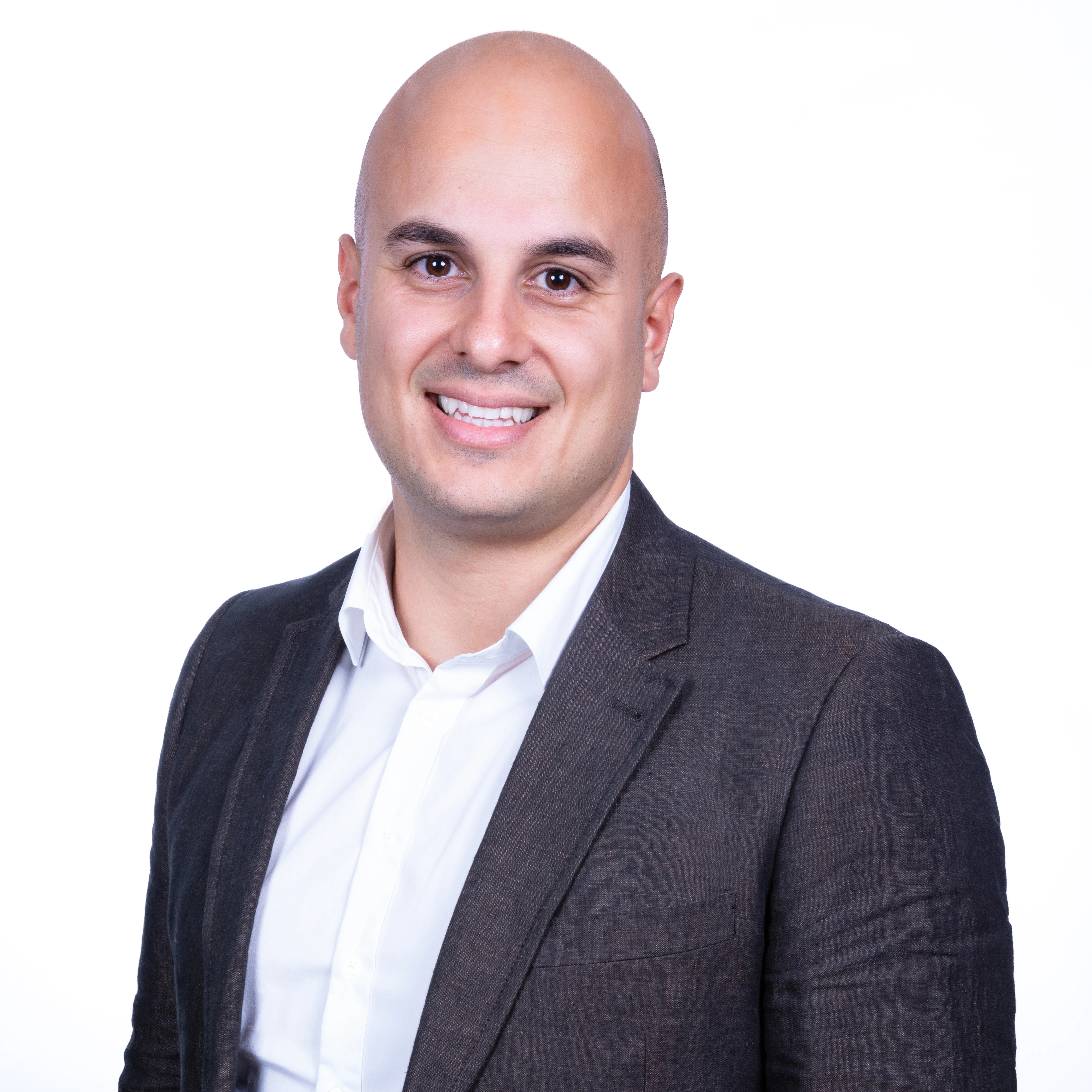
Anton Cuschieri
Integrity Management Team Lead, Intelligent Assets
 Connect