
 Connect
News article
Article
Wood selected by Equinor to strengthen lifecycle data management


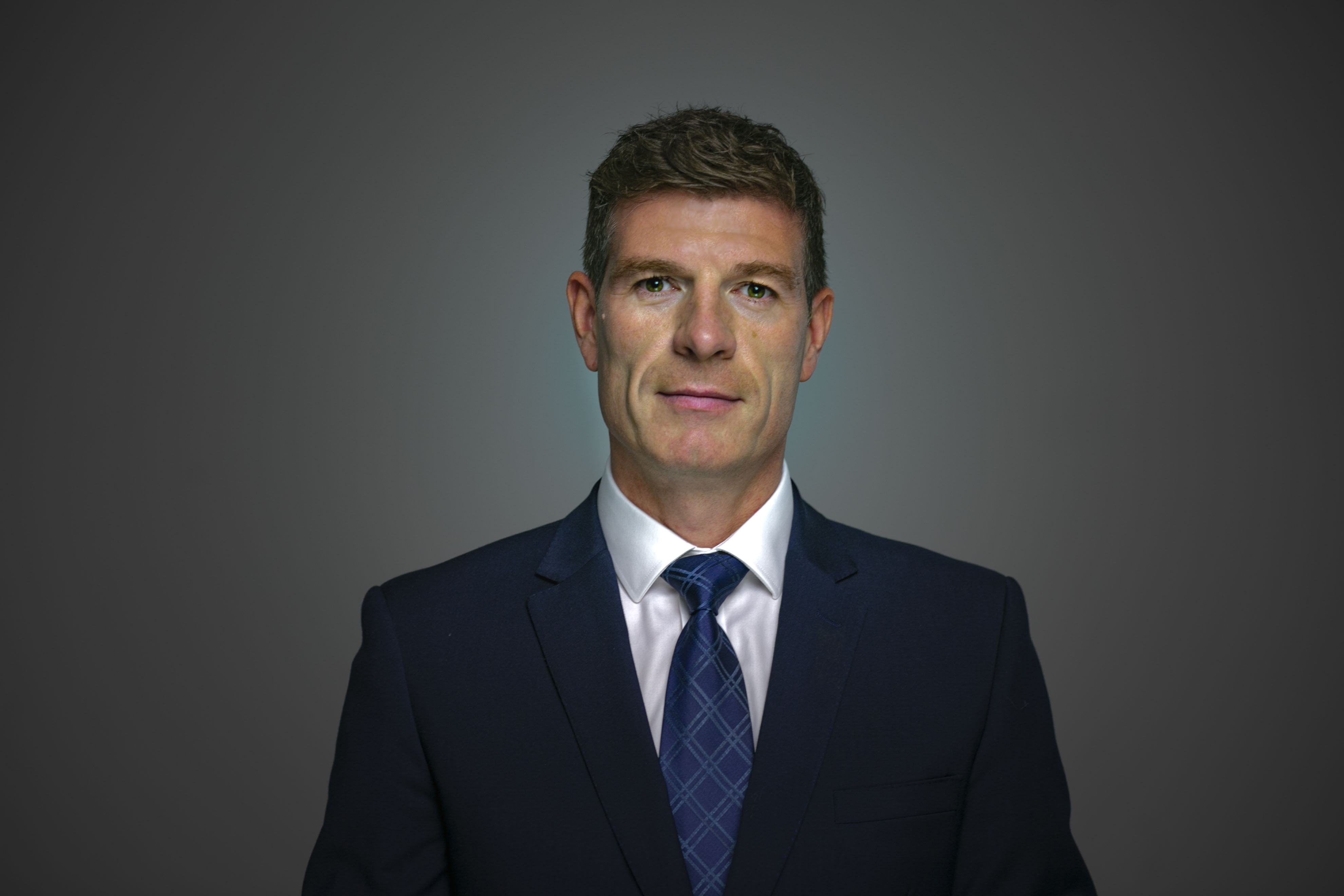
Ellis Renforth, Regional President, UK and Europe, Wood
Across the UK and Norwegian Continental Shelves, operators are asking the same fundamental question - how do we make existing infrastructure work harder while bringing new reserves online, extending asset life and reducing carbon intensity? One I expect to be discussed at length at ONS, which takes place in Stavanger later this month.
Norway has a long-term role in European energy security and a strong track record of turning offshore complexity into industrial advantage. Recent global geopolitics has brought this into even sharper focus. The UK has decades of delivery experience, a deep supply chain and a basin that continues to create value through the right interventions. The opportunity now is to bring those learnings together and apply them with discipline.
That opportunity also depends on the right policy environment. Norway has shown the value of treating offshore capability as a strategic national asset, with a clear framework that supports continued investment. The UK has the resource base, skills and supply chain to do the same, but it needs the confidence that comes from timely approvals, fiscal predictability and long-term policy clarity.
Maturity changes the economics of a basin, but it does not remove the opportunity. In earlier phases, value often came from scale - large discoveries and significant capital projects. Today, value is increasingly created through precision and realised by expertise combined with the latest technology. That means understanding an asset in detail, recognising its constraints early and making investment decisions that reflect real delivery conditions.
Operators need clarity and safe, predictable execution. They need partners who understand what happens when a promising concept meets a producing asset, ageing infrastructure and cost pressure. That is the real world of the North Sea, and it is where good engineering makes the difference.
Subsea tiebacks are one of the most important tools available to mature basins. They allow smaller or more marginal discoveries to be developed through existing infrastructure, reducing the need for major new builds and helping producing assets remain economically viable for longer. In Norway, where many future opportunities will be smaller, near-field developments, that matters. And in the UK, where the policy and investment environment is increasingly focused on existing fields and infrastructure, it matters just as much.
For the UK, this is where policy and project delivery meet. Tiebacks, brownfield upgrades and life extension projects rely on investment decisions that are sensitive to approval timelines and fiscal conditions. If the UK wants to unlock the remaining value in its basin, it needs a framework that encourages operators to commit capital before opportunities become uneconomic.
Tiebacks only create value when they are properly defined from the start. Fast-track success is not measured by how quickly a project moves through early decision gates, but by how well constraints are understood before they drive rework. Where interdependencies remain unclear, teams need to know which options should stay open. Capacity, topsides interfaces, shutdown strategy, subsea reliability, brownfield scope, long-lead items and operating philosophy all need to be tested against real delivery conditions before a concept becomes too fixed.
That is the point I would emphasise. Subsea tiebacks can move at pace when the work is better aligned earlier. If operators validate a concept against constraints, execution limits and asset data before key investment decisions, they improve decision quality and reduce the risk of costly rework later in the process.
Understanding the full asset lifecycle , from early concept and front-end definition through to brownfield engineering, commissioning and operations, is key. Our work on developments such as bp Murlach and Seagull in the UKCS shows how early alignment between subsea, topsides, operations and project delivery can help tieback opportunities move from concept into execution with greater confidence. We have also applied the same thinking in other offshore basins, including in the US Gulf. The strongest outcomes come when teams work from a shared understanding, with assumptions challenged early.
The same principle applies to asset life extension. The North Sea’s future will be shaped by practical decisions made every day - improving uptime, reducing backlog, removing bottlenecks and making offshore work safer and more efficient.
Digital tools have an important role when they are grounded in operations. The industry has moved beyond digital for digital’s sake. Clients want insight they can act on, from asset integrity data that helps redefine maintenance schedules to predictive analytics that support earlier intervention. Used properly, digital capability strengthens engineering judgement rather than replacing it.
The UK and Norwegian shelves are different markets, with different fiscal regimes, policy frameworks and operator landscapes. Yet many of the technical and commercial challenges are shared.
There is also a policy lesson. Norway has continued to provide a clear, investable framework for offshore development, recognising that mature basins still have a strategic role to play in energy security, industrial resilience and the transition. The UK now needs the same clarity of purpose. That means timely licence approvals, fiscal conditions that support reinvestment, and a clear recognition that responsibly produced domestic energy remains essential while demand persists.
The mature North Sea will be reinvented through better decisions, sharper engineering and disciplined execution. It will depend on optimising existing infrastructure, unlocking tieback opportunities intelligently and reducing emissions through work that can be delivered.
That is the opportunity ahead of us. The North Sea still has value to create, but industry cannot unlock it alone. Operators and partners must continue to be practical, collaborative and honest about complexity. Government has a role to play too - providing the certainty, approvals and fiscal conditions that allow responsible investment to move. If the UK wants to protect energy security, sustain skilled jobs and keep its offshore supply chain competitive, it must treat the North Sea not as a legacy basin to be managed down, but as a strategic asset to be reinvented.
Visit Wood on Stand 8350 in Hall 8 at ONS.