

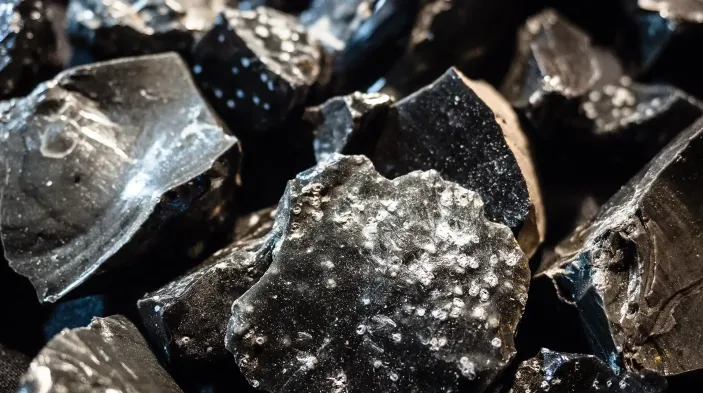


Electric vehicles, energy storage and wider electrification are causing an unprecedented surge in demand for battery minerals, accelerating a worldwide search for new, reliable sources of supply.
Graphite, a critical component in lithium-ion battery anodes, has come under increased focus as global supply remains concentrated and new projects struggle to keep pace with rising demand. Against this backdrop, attention is increasingly turning to countries with untapped mineral potential. Among them is Kazakhstan, which is positioning itself as an emerging player in the battery materials supply chain. With significant natural resources the country is seeking to diversify beyond traditional commodities and attract international investment into critical minerals.
One project gaining momentum is the Sarytogan Graphite Project, a large, high-grade deposit in eastern Kazakhstan that has been identified as strategically important under the European Union Critical Raw Materials Act. The project’s scale and quality have placed it as one of the more closely watched graphite developments globally.
Recent industry recognition of work associated with the project has also highlighted the role of engineering and project delivery partners in advancing early-stage developments.
Engineering support underpins project progress
Wood is currently delivering the project’s definitive feasibility study (DFS), including front-end engineering and design (FEED) for the processing plant and associated infrastructure. The study, expected to be completed in mid-2026, will help determine the technical and economic viability of the project for Sarytogan, whilst outlining a pathway toward potential development.
If realised, the project could become Kazakhstan’s first large-scale graphite operation, marking a significant step in the country’s critical minerals ambitions.
Building on existing experience
Wood’s involvement in Sarytogan reflects both its broader mining expertise and its growing presence in Kazakhstan. The company has supported a range of applied intelligence projects in the country and is increasingly aligning its capabilities with the rising importance of battery minerals.
Its experience in early-stage project development, particularly feasibility studies and front-end design, has become increasingly relevant as mining companies look to de-risk projects and secure investment in a competitive global market.
Beyond this, as technical mining capabilities continue to grow in-country, Wood is leaning on its centres of excellence to ensure projects can be delivered at pace. Delivery of the Sarytogan DFS scope is being coordinated across teams in Kazakhstan, Australia and Italy, combining technical capability with local knowledge and regulatory understanding.
This approach allows Wood’s experienced teams, who have a strong track record in delivering battery minerals scopes, to support and build the capabilities locally. As battery mineral demand in Kazakhstan remains strong, embedding these core skills within the local workforce is an investment in the country’s future ability to deliver projects in this field.
A broader shift in supply chains
Projects such as Sarytogan are part of a wider shift to diversify graphite supply, as governments and industry seek to reduce reliance on established producers and build more resilient supply chains.
For Kazakhstan, successful development could strengthen its role in future-facing industries and support economic diversification. For Wood, it represents an opportunity to apply global mining expertise in a region with a growing role in the energy transition.