
 Connect
Article
Article
Designing accessible PC2/BSL2 laboratories



Research and healthcare organisations continue to play a critical role in responding to infectious diseases and emerging biological threats. Safe, resilient facilities are essential for investigating, diagnosing and treating diseases such as Ebola, tuberculosis, MERS, SARS and COVID-19, while also supporting long-term public health preparedness and research.
As head of Wood’s Life Sciences business in Australia, I am proud to have been involved in the design and delivery of world-class high containment laboratories and infectious diseases units for various Australian State Government health departments, top tier Australian Universities and global Medical Research Institutes.
One of the key challenges these types of facilities face are the protection of both their operators and environments ensuring consistent operations. This includes various contingency features and procedures such as safe shutdowns in case of power loss or plant equipment malfunction.
Wood has a strong background in designing and delivering pharmaceutical cleanroom facilities and services, and over the last 10 years, we have adapted this expertise to high containment laboratories. While pharmaceutical cleanrooms are designed to protect the medicinal product from the environment and operators, high containment facilities are designed to protect the environment and operators from pathogens. Like cleanrooms, high containment facilities need to be easily cleaned and decontaminated. This is where we apply our expertise and rigorous protocols to develop similar details for these facilities that we can also transfer to other areas too like chemical research facilities and battery and solar panel manufacturing.
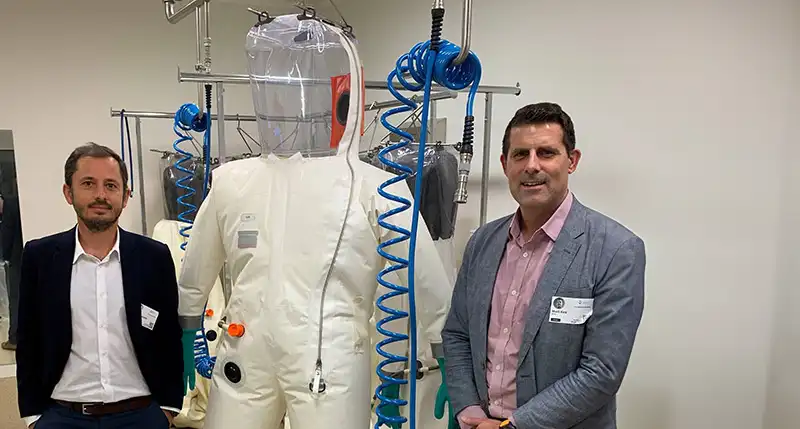
With our niche expertise in high containment facilities design we support clients in delivering complex and critical assets that are helping combat infectious diseases. Our design solutions have helped to deliver several state-of-the-art biosafety level (BSL) 3 and 4 facilities, the highest levels of biosafety, for universities, state health departments and global organisations.
During the 2018-2020 Ebola outbreak, Wood led the design and fast-tracked delivery of a BSL-3 pathology facility, incorporating BSL-4 isolation capability, to support testing of high-risk organisms in Australia. We have also provided specialist technical advisory services for infectious disease facilities that strengthen healthcare systems' ability to respond safely and effectively to outbreaks and emerging health challenges.
We also support and oversee the building, testing, qualification and ongoing certification of our clients' facilities. We provide specialised services for a world-class public health reference laboratory (BSL-3 to BSL-4) in Australia that supports outbreak investigations, reference services, research and laboratory analysis. These facilities help healthcare professionals, researchers and public health agencies respond to outbreaks, advance scientific research, protect communities and strengthen long-term public health resilience.

A high-containment laboratory is a specialist facility designed to safely handle infectious agents and other hazardous biological materials while protecting personnel, the environment and the wider community.
Biosafety Level 3 (BSL-3) and Biosafety Level 4 (BSL-4) laboratories are facilities designed to work with increasingly hazardous pathogens. They require specialised engineering controls, containment measures and operational protocols.
These facilities support disease research, outbreak response, diagnostic services and public health preparedness while reducing the risk of pathogen exposure or release.
Key considerations include containment strategy, ventilation systems, pressure control, decontamination processes, resilience, safety systems and regulatory compliance.