

Case study
One year in: Delivering Thailand’s flagship Clean Fuel Project


FEED through detailed engineering, procurement, modular fabrication, construction management and commissioning.
The refining capacity was 110,000 barrels per day and execution period was between 2018 and 2024.
Wood supported a leading integrated energy company in the delivery of one of the country’s largest and most complex major refinery modernisation programmes in Buenos Aires, upgrading critical process units to meet Argentina's 2024 low-sulphur fuel specifications and European-equivalent emissions standards.
The programme improved fuel quality, energy efficiency and long-term operational resilience at a refinery processing 110,000 barrels of oil per day.
Commencing in 2018 and completed in 2024, Wood delivered the programme across the full project lifecycle, from front-end engineering design (FEED) through detailed engineering, procurement, modular fabrication, construction management and commissioning.
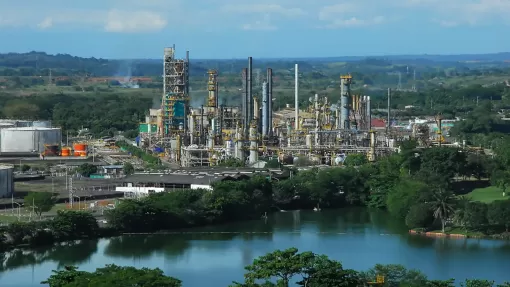
Located in Buenos Aires, the refinery plays an important role in regional fuel production and supply.
To comply with updated national fuel specifications and stricter sulphur limits for gasoline and diesel that came into effect in 2024, the operator initiated a significant programme to upgrade multiple process units and modernise key infrastructure, ensuring long-term operational reliability and performance.
This effort enabled the refinery to produce fuels that met the new sulphur content requirements while enhancing energy generation capabilities through a modern, efficient cogeneration system. Together, these initiatives positioned the refinery to deliver cleaner fuels while improving energy efficiency.
The project was executed by a coordinated global team spanning seven Wood offices, including Milan, Madrid, Istanbul, Shanghai, Chennai, Buenos Aires and Houston. Working as one integrated team, Wood delivered FEED, detailed engineering design, procurement, modular fabrication, construction management and commissioning.

The scope involved modernising key refinery infrastructure, including a catalytic cracker supporting the naphtha hydrotreater and gasoil hydrotreater, a hydrogen production unit using Wood's steam methane reformer hydrogen licensed technology, a sour water stripper, and the outside battery limits (OSBL) scope between existing refinery utilities and a new cogeneration facility.
Engineering, delivery and execution were strategically assigned and connected communication was essential:
This operating model allowed Wood to mobilise specialist expertise where needed, maintain design integrity across locations and respond quickly to evolving project requirements.

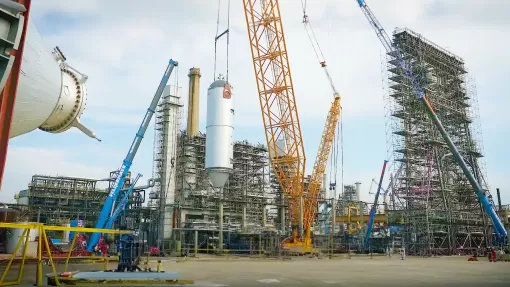
Fifty-one modular units were engineered by Wood, fabricated in China and transported to Argentina for assembly in late 2022. Modularisation reduced on-site construction exposure, improved safety performance and protected the project schedule during periods of global disruption.
Wood closely supervised fabrication activities in the module yard, ensuring rigorous quality control, correct material selection and adherence to safety standards. This approach reduced construction interfaces on site and increased certainty during execution.
Upon arrival in Argentina, Wood provided construction management for the modular units. Construction activities were overseen through Wood’s project representation teams in Buenos Aires and Houston, with training and start-up support led by the Milan team. Start-up was completed in the fourth quarter of 2024, and the new units at the Buenos Aires refinery were successfully brought into operation.
The project progressed through the global COVID 19 pandemic and periods of supply chain volatility. Wood’s early commitment to modularisation, disciplined procurement planning and continuous client engagement allowed the team to navigate the constant change while maintaining schedule certainty.

Throughout execution, Wood worked closely with the operator to adapt plans, manage risk and maintain focus on safe, reliable start up.
Commissioning was completed in late 2024, with all new units successfully brought into operation as planned.
The successful delivery of the Buenos Aires refinery upgrade demonstrates Wood’s ability to simplify complexity, integrate specialist capability and provide steady leadership across large, multi‑year programmes. Our team’s involvement in modifying the project enabled the refinery to produce gasoline and diesel that meet Argentina’s new sulphur content specifications.
Wood brought together engineers and project delivery specialists from across the world to collaborate, while also investing in and strengthening the local workforce in South America. By combining global expertise with local delivery, our team helped enable production of cleaner transportation fuels that meet Argentina's updated sulphur specifications while improving energy efficiency and operational performance.